

The Holy Trinity, explained
Well… not really. More the controversies about it.

Yesterday was Trinity Sunday, being the first Sunday after Pentecost and the day set aside in the Western Church to honour the central doctrine of the Christian religion. That Christians claim to worship a single God who goes by the name of Father, Son and Holy Spirit is a fact well known to most. Quite what that means is less well known, including, and sometimes especially, among Christians themselves.
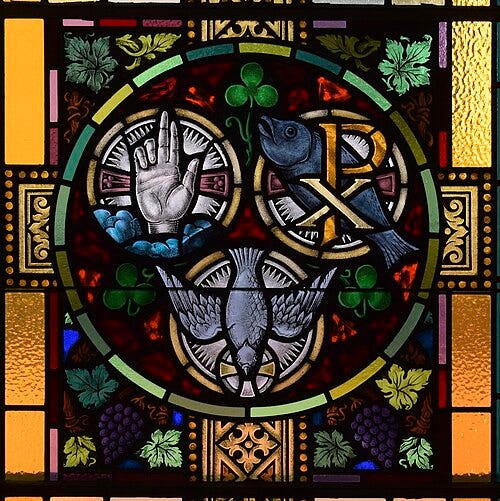
The word “Trinity” appears nowhere in the books of the Bible. At no point, moreover, is it described in detail under any other kind of name. Despite this, the concept is so fundamental that even “Scripture alone” believing Protestants agree that it is an unalterable and essential claim that must be believed by all those who profess to be Christian.
They can say this with confidence because the different strands of Trinitarian belief can be found in both the Old and New Testaments and the concept does not need to be invented so much as pulled together. For churches that hold to sacred tradition, the doctrine is an inescapable conclusion arising from what the people of the early Church believed and taught.
The Apostles and their followers inherited a Jewish tradition that was monotheistic to its core. At no point is there any evidence of those early followers of Jesus claiming to be in breach of this. At the same time, they also clearly taught that Jesus was God and, if the Gospel of John is to be believed, that there was no time when he was not God. But the Scriptures also assume that Jesus is distinct from the Father and the Holy Spirit, who are both presented as actors in their own right.
All of this raw material was there from the start. Nothing needed to be added in order to give the belief form. What took time was the development of the language used to describe it.
This is not to say that the Trinity has lacked for challengers over the centuries. In fact, the doctrine was almost always refined in response to some competing conception of God that had started to become popular. And the first great controversy to engulf the Church after the age of the Apostles involved a direct attack on the co-eternity of Jesus.
